
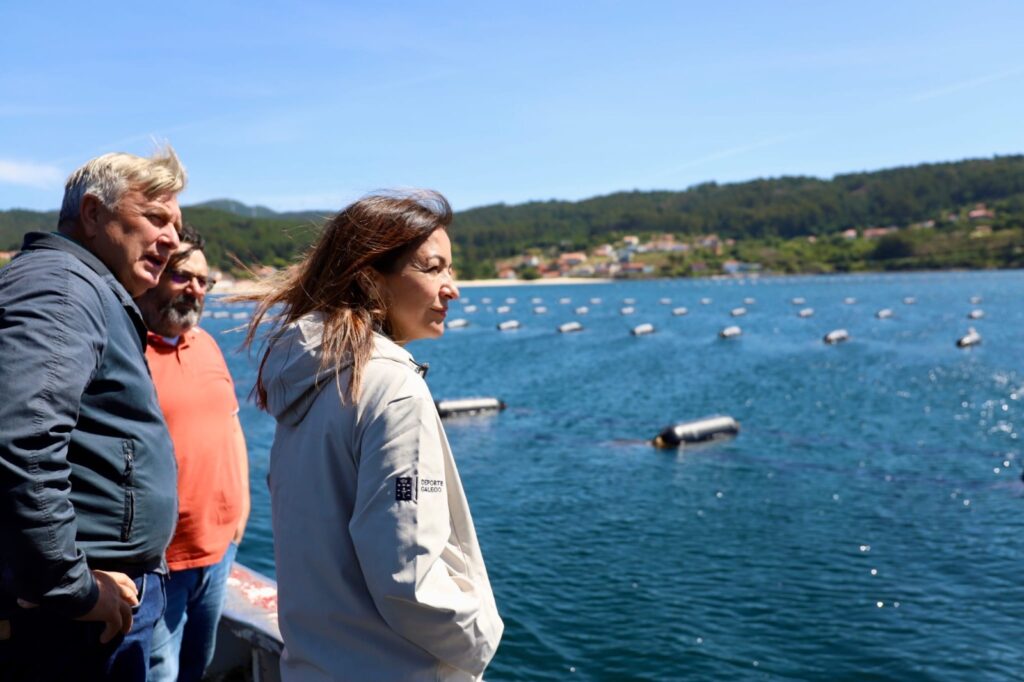
Removal of the mooring ropes from Esteiro Cove
Opmega demonstrates that it is possible to make the most of the resources provided by nature whilst reducing pressure on the coastline
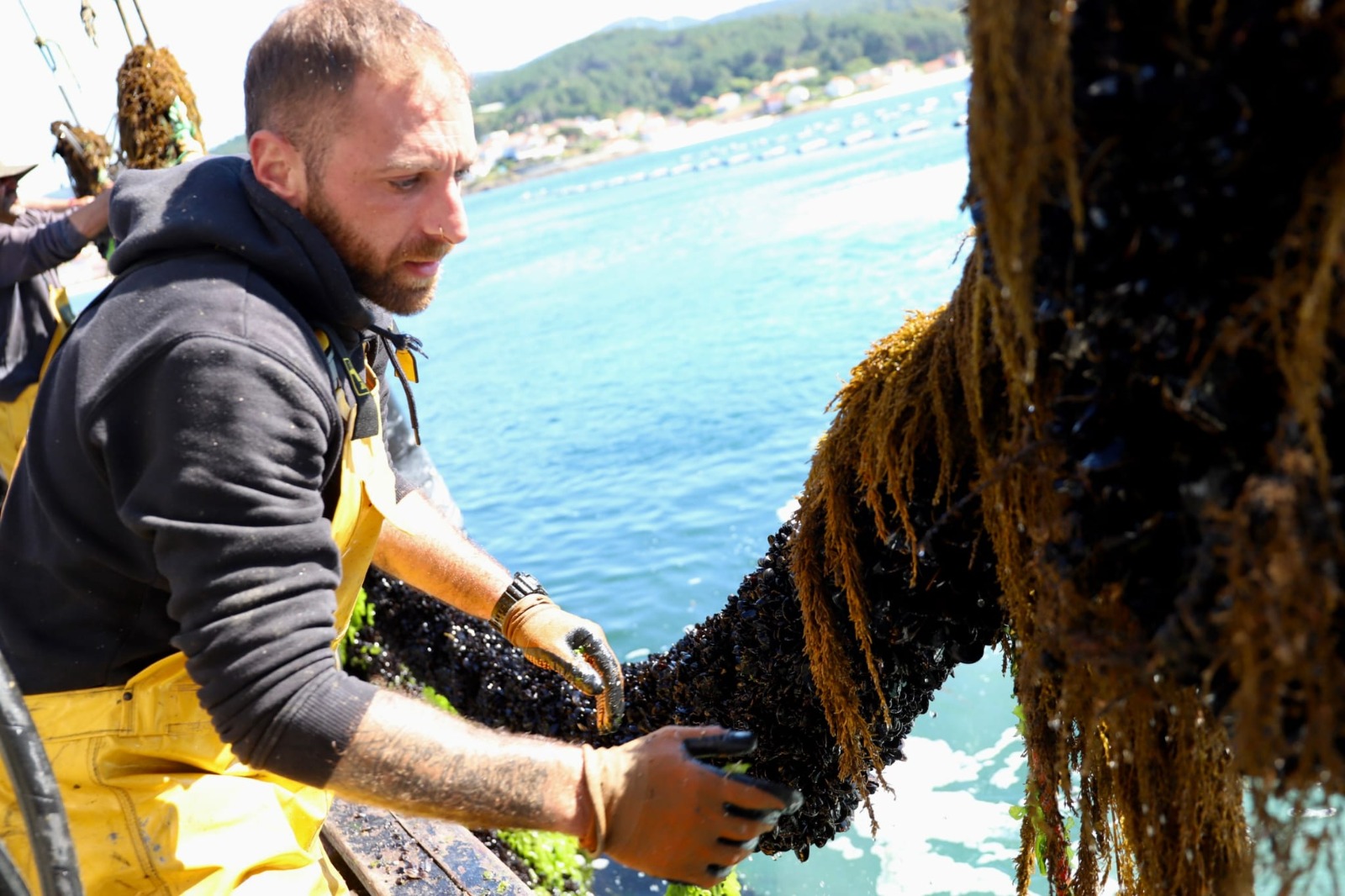
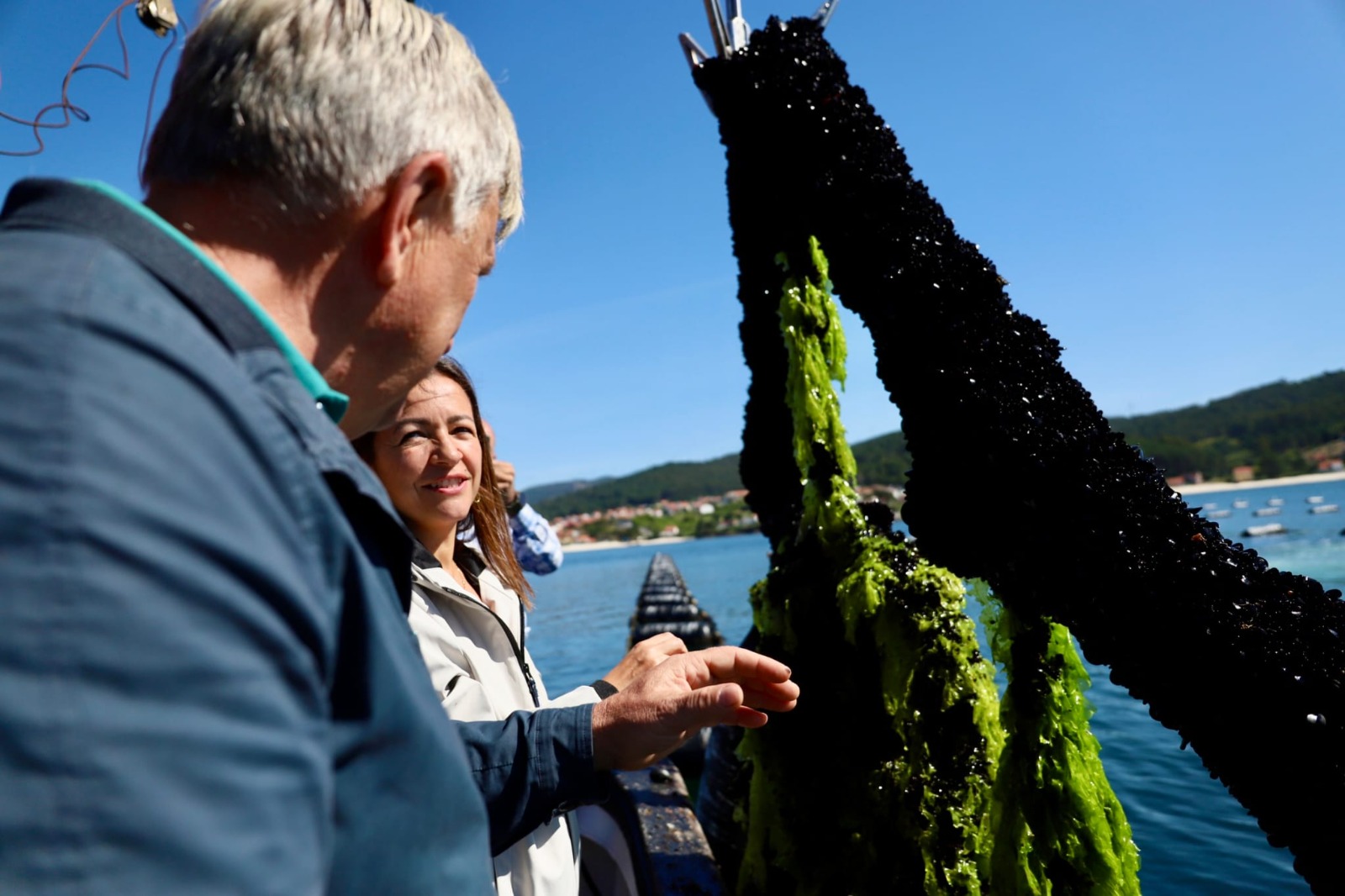
The Regional Minister for the Sea, Marta Villaverde, attends the removal of the mussel collection ropes from the longlines located in the Esteiro Inlet, an initiative promoted by Opmega to guarantee the supply of mussels and reduce pressure on natural beds
Muros, 10 June 2026. The Galician Mussel Producers’ Organisation (Opmega) began this week the removal of more than 2,400 mussel collection ropes suspended from the longlines installed in the Esteiro Inlet, in Muros, in an initiative that demonstrates the positive results of a model promoted by the sector itself to move towards more sustainable
The presence of the Regional Minister for the Sea, Marta Villaverde, and other members of her team, alongside Opmega’s board of directors, coincided with one of the most significant moments of the entire process: the collection of the sea urchin roe attached to the ropes for subsequent transfer to Opmega’s various branches and distribution among its member producers.
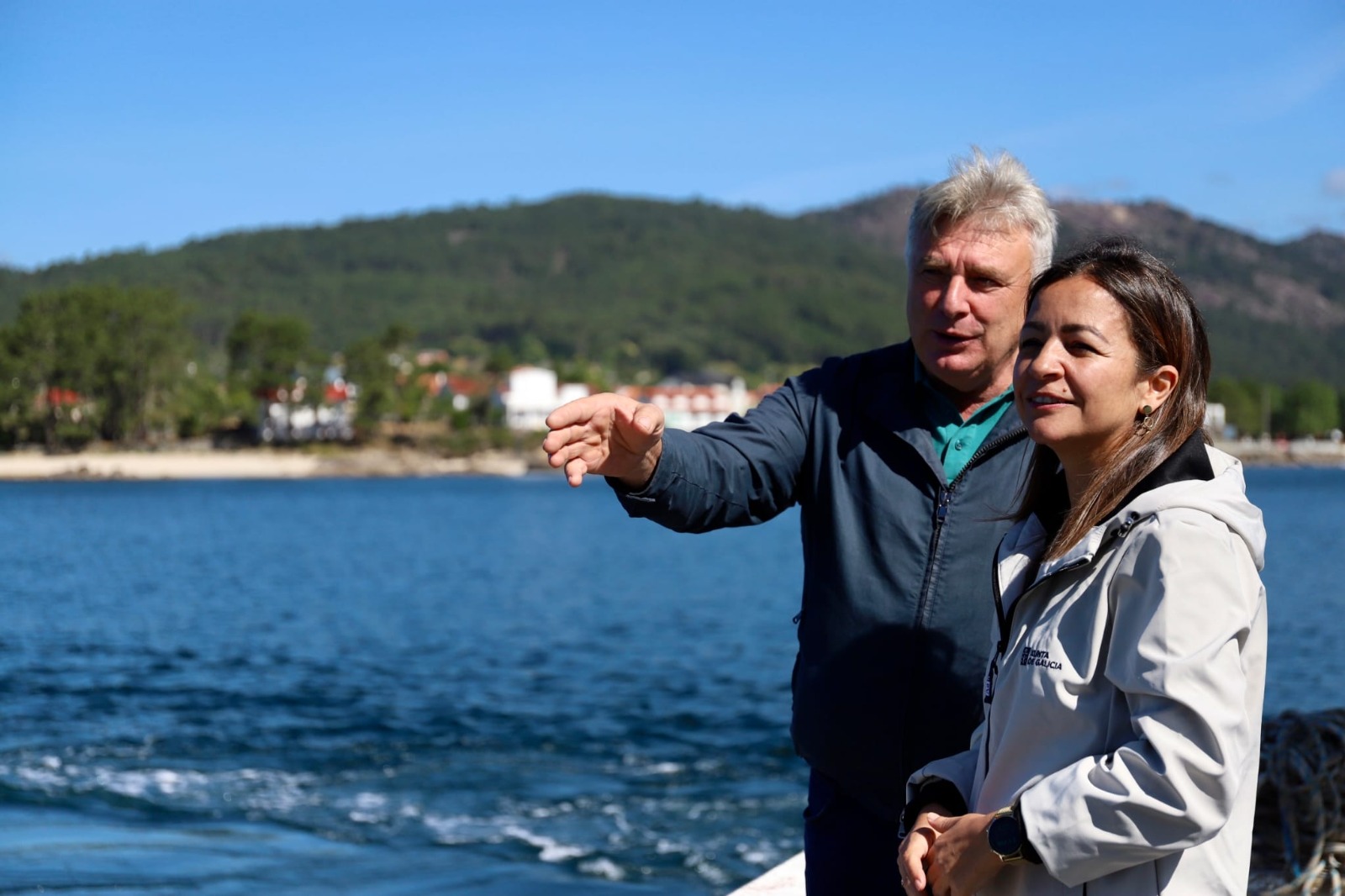
A directiva de Opmega xunto coa
conselleira asistiu ao traslado das cordas con mexilla.
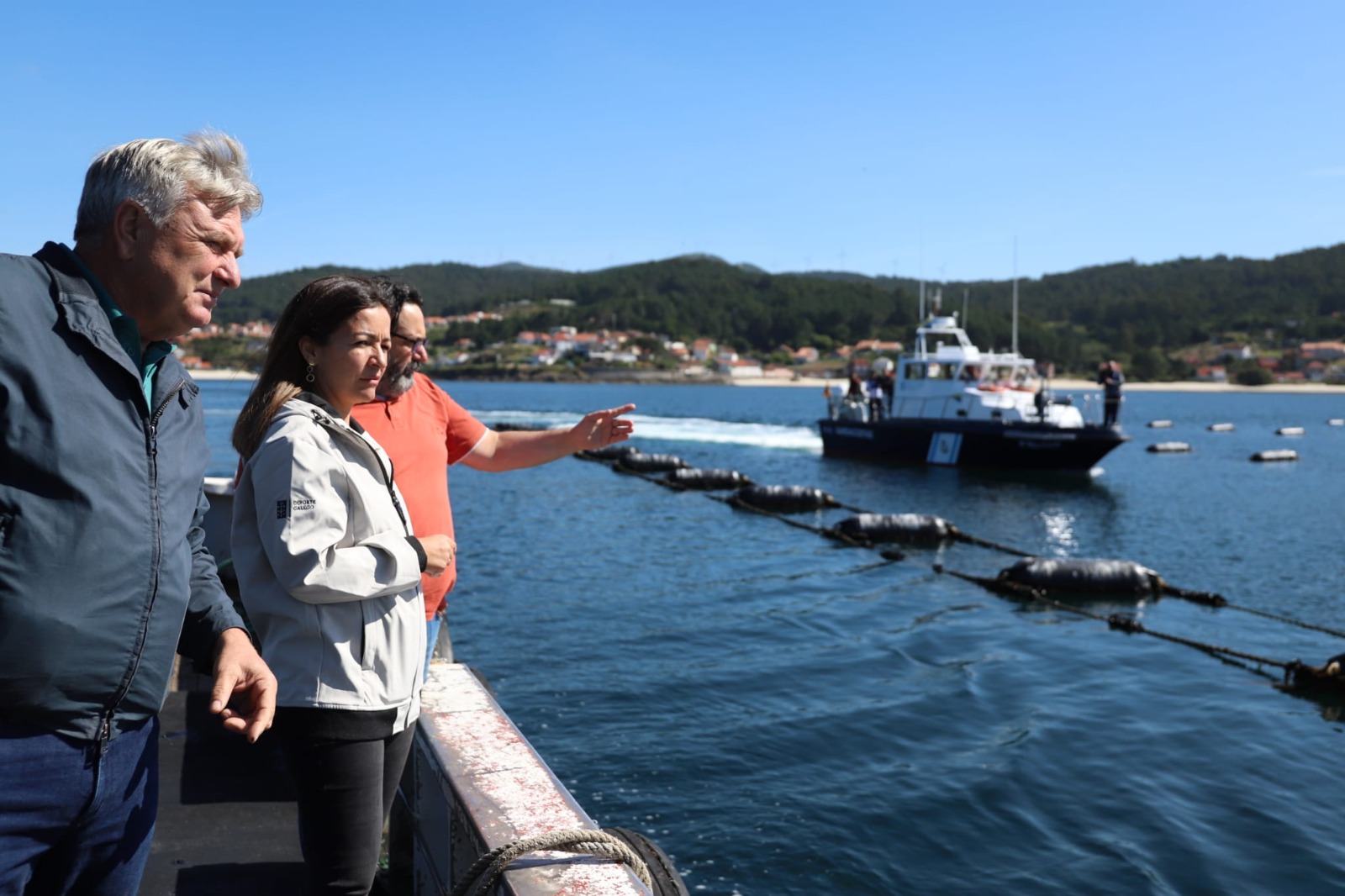
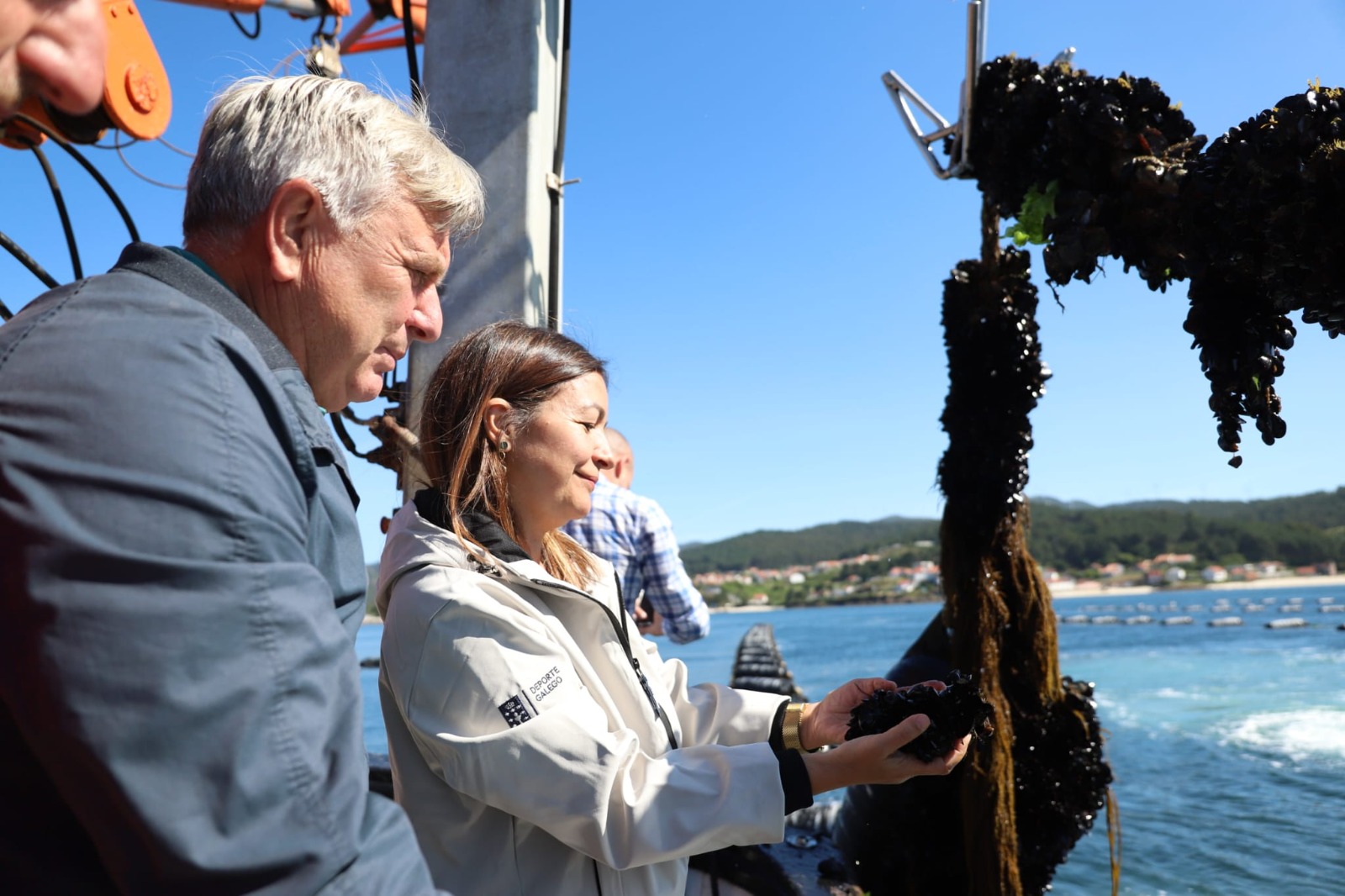
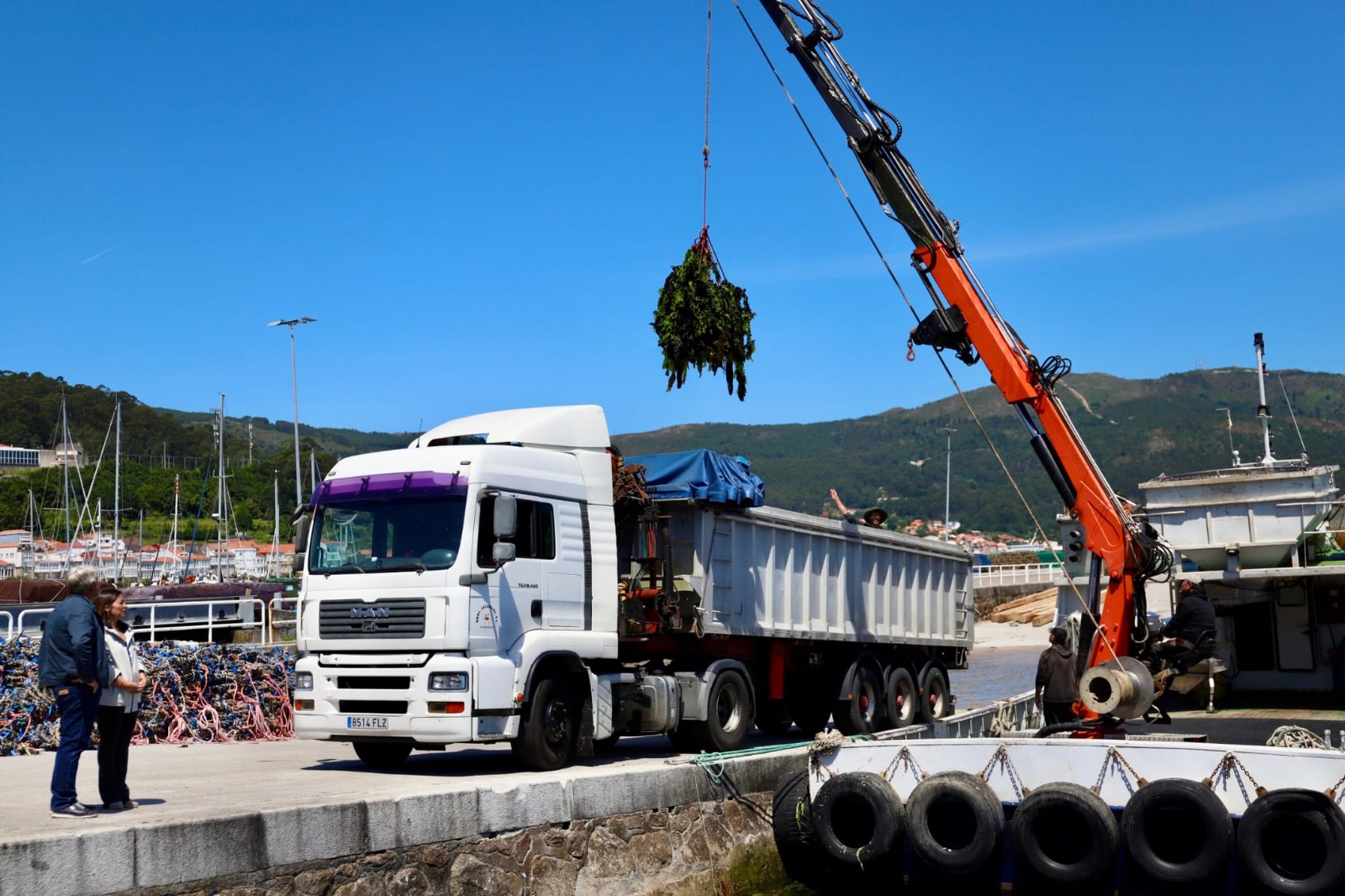
As cordas trasladaranse a todas as delegacións para distribuírse entre as socias e socios de Opmega
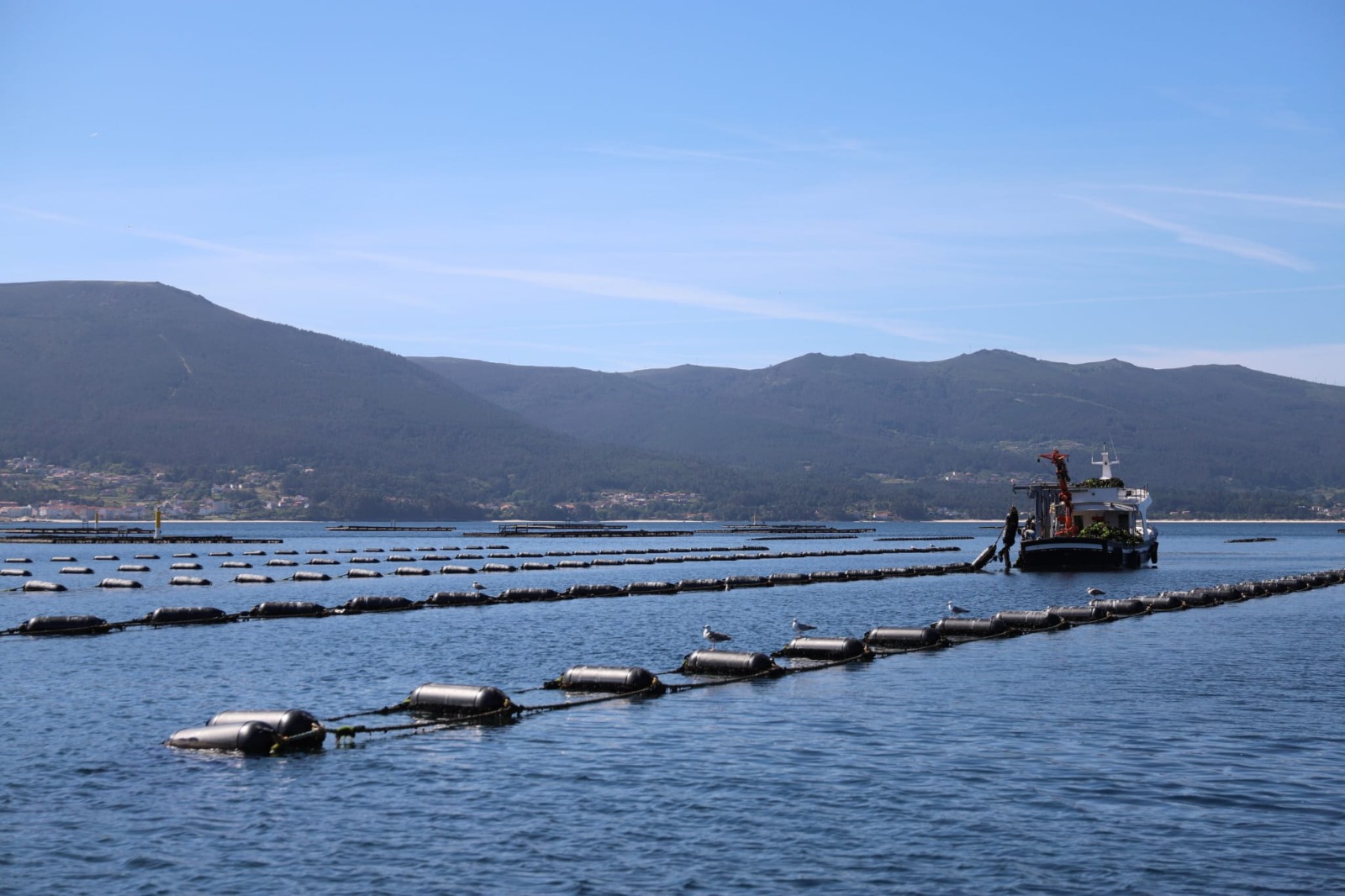
The system enables mussel spat to be harvested in a controlled manner from the natural environment. Once removed from the ropes, the spat—which is in an early stage of growth—is transported by sea and land to various destinations, where it will be used for stringing and subsequent cultivation on the mussel beds.
Opmega highlights that this initiative responds to a proposal the organisation had been advocating to the authorities for over five years and that the results obtained are confirming its usefulness. In addition to helping to guarantee the availability of seed, the system helps to relieve pressure on traditional extraction areas and move towards a more balanced use of resources.
The organisation points out that the sector’s sustainability necessarily depends on ensuring a supply of mussels without compromising the ecosystems on which the activity itself depends. In this regard, rope-based harvesting has become a strategic tool to complement other sources of supply and reinforce the future viability of Galician mussel production.
The operation carried out in Esteiro also incorporates monitoring and tracking systems that make it possible to know at all times the origin, volume and destination of the seed harvested. This traceability ensures comprehensive control of the entire process, from collection to delivery to the various branches and producers.
The more than 2,400 lines installed in the cove are currently being removed, now that the harvesting process has been completed. The cod obtained will be distributed among Opmega’s members via the organisation’s various branches, ensuring an orderly distribution and efficient use of this vital resource for the cod fishing industry.
Over the coming days, the removal of the ropes suspended on the ‘long lines’ installed in Esteiro will be completed, bringing to a close a campaign that confirms the potential of an initiative driven by the producers themselves to reconcile production, sustainability and the conservation of marine resources. A model which, in addition to delivering results, helps to strengthen the sector’s autonomy and tackle the future challenges facing the Galician shellfish sector with greater confidence.
Statement by the Regional Minister for the Sea
The Regional Minister for the Sea, Marta Villaverde, emphasised in Muros that long lines “are one of the methods currently being trialled in the Galician estuaries to guarantee the supply of bivalves and ensure that fishing seasons do not depend exclusively on the presence of mussel beds on rocks or on the collection ropes of the mussel rafts”.
An initiative which, Villaverde added, “strengthens the strategic position of mussel farming for the region, both for its capacity to generate employment and for its essential role in the social and economic cohesion of coastal communities”.